
Governing the Vibe Coding Revolution: ServiceNow Brings Build Agent to Major Third-Party IDEs and AI Coding Tools
The emergence of "vibe coding" the practice of rapidly generating applications via natural language prompts using artificial intelligence is fundamentally reshaping the velocity of software engineering. AI coding tools have made it faster than ever to write syntax and assemble functional logic. However, software constructed outside of centralized corporate ecosystems introduces severe architectural risks, compounds technical debt, and routinely fails to satisfy strict compliance parameters. This structural gap has created a major shadow development problem: ungoverned applications multiply faster than security teams can validate them, resulting in wasted investments when apps are rejected due to security or operational deficiencies.
Simultaneously, the individuals closest to actual business challenges including platform administrators, business analysts, and citizen developers have historically lacked access to intuitive, AI-native environments that simplify enterprise-grade construction. To bridge this divide, ServiceNow announced a major platform expansion at its annual Knowledge 2026 conference. By making Build Agent generally available in ServiceNow Studio and extending its core capabilities into external AI coding giants and integrated development environments (IDEs), the platform introduces a framework where any developer can build production-ready applications and autonomous agents with comprehensive enterprise governance and platform context applied by default.Build Anywhere, Run and Govern Universally on ServiceNow
In an architectural shift designed to meet engineers where they choose to write code, ServiceNow has embedded Build Agent’s core skills directly into the ServiceNow Software Development Kit (SDK). This integration allows developers to leverage full ServiceNow platform intelligence while working inside popular external environments, specifically Cursor, Windsurf, Claude Code, and GitHub Copilot. Whether an application is drafted within a localized IDE or via a third-party agentic tool, once it is deployed to the ServiceNow AI Platform, it instantly inherits enterprise-grade audit trails, strict compliance tracking, native performance controls, and standardized security checks.
To ensure stability prior to deployment, developers are automatically provisioned an isolated sandbox environment to test, modify, and validate their generated code. Once finalized and promoted to production, the application connects natively to the distributed workflows, databases, and core business systems that power the wider enterprise. For engineers who prefer to build directly inside the platform, Build Agent within ServiceNow Studio is now powered by Anthropic models. This optimization facilitates longer context window sessions, allowing developers to orchestrate entire application builds in a single sitting without losing functional continuity.Furthermore, Build Agent extends its ecosystem reach by acting as a Model Context Protocol (MCP) Client. This capability enables the agent to natively ingest external engineering and design contexts, directly pulling user requirements from Miro, precise user interface design specs from Figma, and repository code tracking from GitHub into the application build process.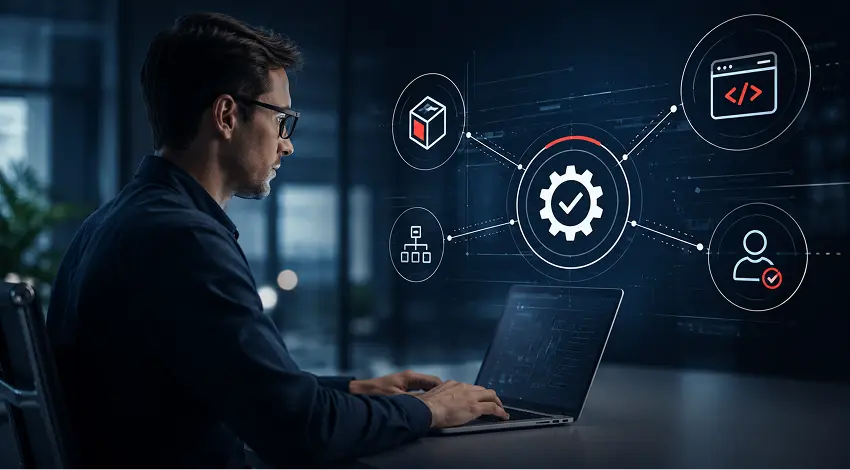
Platform-Wide Customization and Application Scope Expansion
Historically, modifying or extending out-of-the-box ServiceNow environments required highly specialized, platform-specific development expertise. This dependency often created substantial IT backlogs, slowing down business transformation initiatives. Build Agent eliminates this operational bottleneck by extending its capabilities across all application scopes, enabling any developer to customize and enhance existing workflows and out-of-the-box applications, rather than limiting them to greenfield applications built from scratch.
Because Build Agent is embedded directly into ServiceNow Studio the primary environment for the platform’s developer community it maintains a real-time, comprehensive understanding of the active, live instance. It evaluates existing data models, unique tenant configurations, and active corporate policies. Utilizing this localized context, the agent can generate entire end-to-end applications complete with structured workflows, service catalog items, user interface components, and necessary system configurations within a single interactive session.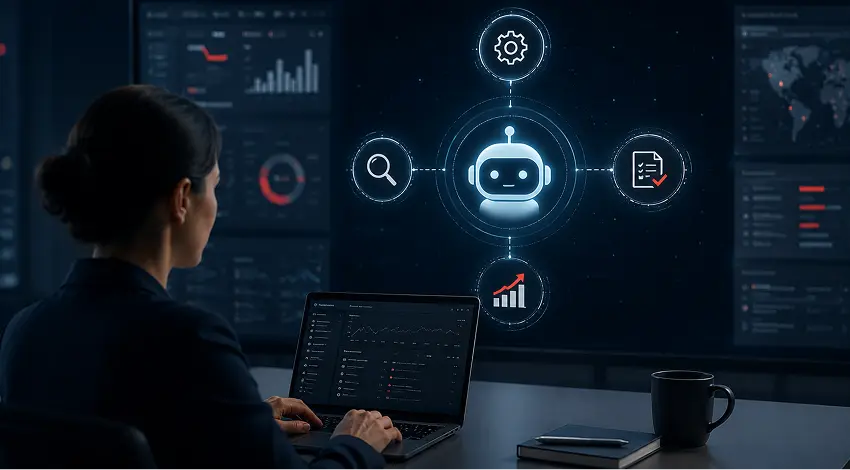
Embedding AI Agents into Application Workflows via Reimagined AI Agent Studio
The process of building and deploying enterprise-scale AI agents has traditionally demanded extensive technical experience. To lower this barrier to entry, ServiceNow has introduced a completely reimagined AI Agent Studio, which delivers a conversational, guided creation path that allows a significantly broader demographic of builders to design, configure, and scale digital workers.
Under this updated architecture, when developers construct custom applications using Build Agent, in-app AI agents are embedded directly into the underlying application workflows by default. Once deployed, these native agents handle user queries, surface contextual business insights, and execute specific operational actions on behalf of employees. All of these autonomous interactions remain under the continuous oversight of the ServiceNow AI Control Tower, ensuring that the application grows progressively smarter and more useful after it enters production.
App Engine Management Center: Zero-Cost Governance at Scale
As AI-assisted development drastically accelerates the volume of applications and digital agents being introduced to the enterprise, a rigid governance layer becomes vital to prevent system sprawl and security degradation. To support this requirement, ServiceNow announced that its App Engine Management Center (AEMC) is now available to all global customers at no additional cost via a freemium tier.
Organizations utilizing Build Agent gain access to a centralized portal managing automated deployment approvals, comprehensive release management pipelines, and end-to-end application lifecycle governance. This safely bridges the gap between rapid AI creation and controlled enterprise deployment. To ensure long-term software maintainability, Build Agent incorporates a self-healing test loop that programmatically executes generated code against standardized quality gates. Additionally, organizations can leverage Custom Instructions to hardcode their proprietary development standards, naming conventions, and compliance policies directly into the agent, ensuring all AI-generated code mirrors the specific structural patterns of the enterprise.
What Should Organisations Do Now?
To capitalize on these advancements and transition away from high-risk shadow development, enterprise technology leaders and architects should implement the following steps:
- Consolidate Shadow AI Coding Practices: Move developer teams away from unverified, standalone AI coding tools and transition them toward the governed ServiceNow SDK or ServiceNow Studio to ensure all generated code automatically inherits corporate security baselines.
- Activate App Engine Management Center (AEMC): Leverage the newly available free tier of AEMC to establish automated deployment approval guardrails, release management pipelines, and application quality gates across all corporate departments.
- Prepare Data Assets for External IDE Integration: Map out internal development workflows to take advantage of Build Agent's core skills within Cursor, Windsurf, Claude Code, and GitHub Copilot, ensuring proper authentication and sandbox provisioning are established.
- Incorporate Design Context via MCP Clients: Align product management and design teams to connect their active workspaces in Figma, Miro, and GitHub directly to the Build Agent MCP Client, optimizing the automated ingestion of product requirements into functional code.
- Align Project Roadmaps to Release Milestones: Structure internal application and agent development timelines around the official ServiceNow rollout: deploy Build Agent in Studio and implement skills for tools like Claude Code immediately (as of April 2026), plan for the Build Agent MCP Client, ecosystem integrations, and AI Agent Studio in Q2 2026, and prepare for the broad-scale AEMC freemium tier integration in Q3 2026.
 The convergence of rapid natural language generation and strict platform governance marks a definitive evolution in enterprise software development. By embedding autonomous construction capabilities directly into the tools engineers already utilize, while routing the output through a unified, secure execution platform, organizations can successfully eliminate the historic tradeoff between speed and control.