Unlocking Connected Enterprise Intelligence: How ServiceNow Workflow Data Fabric Unifies Modern Operations
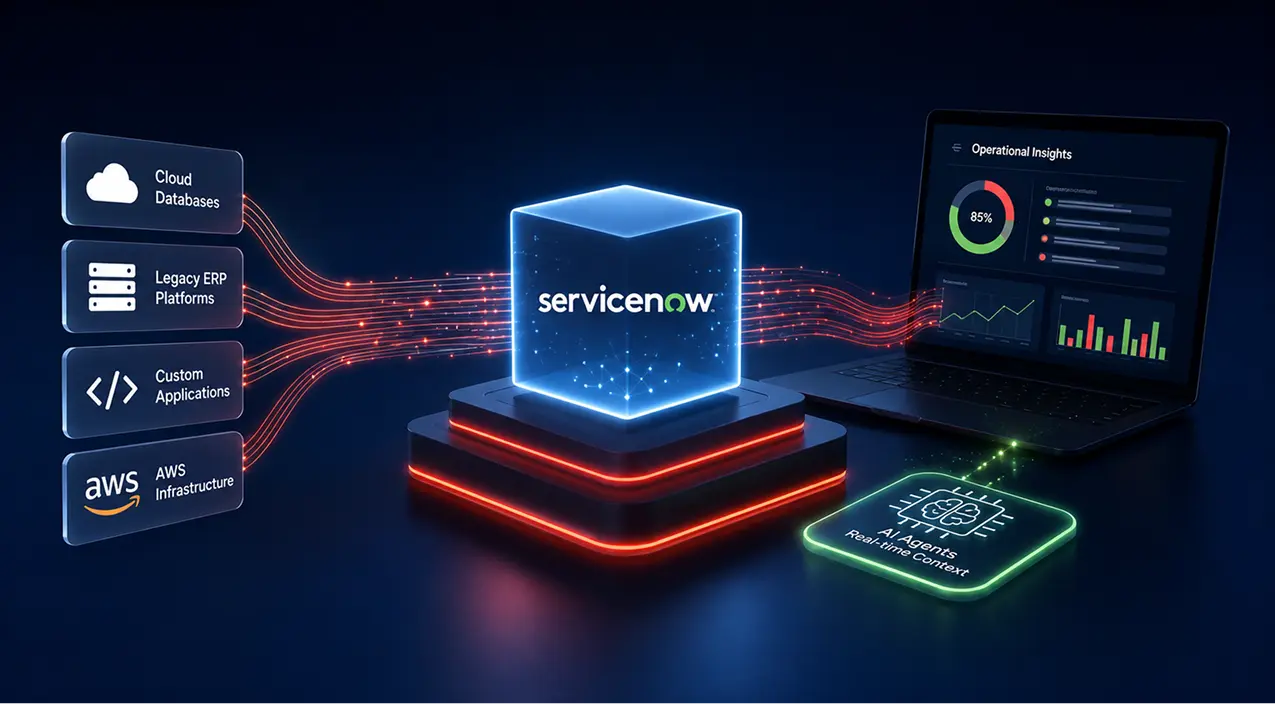
In modern enterprise IT environments, data rarely lives in one place. Critical operational insights are typically scattered across cloud databases, legacy ERP platforms, custom applications, and AWS infrastructure repositories. Connecting these isolated information pools often means managing expensive data pipelines, building fragile custom integrations, or coping with outdated information.
With the ServiceNow Workflow Data Fabric unified enterprise data framework, enterprise technology leaders can finally bridge these gaps. Instead of physically moving or duplicating massive datasets across systems, this architectural advancement creates a dynamic, zero-copy data layer that allows workflows and AI agents to access real-time operational context wherever it resides. We examine how the Workflow Data Fabric functions in practice, why it outperforms traditional integration methods, and how executives, platform administrators, and AWS operators can leverage it to drive seamless digital operations.The Challenge: The Data Fragmentation Trap
For years, enterprises attempting to orchestrate cross-departmental workflows faced a recurring dilemma: how to access data trapped in external platforms without creating maintenance nightmares.
Traditionally, organizations relied on two flawed approaches:- Heavy ETL (Extract, Transform, Load) Pipelines: Moving massive datasets into central warehouses or ServiceNow tables. This approach introduces high storage overhead, complex sync schedules, and stale data.
- Point-to-Point Custom REST Integrations: Writing hardcoded API connections between individual systems. While this offers live access, maintaining dozens of custom connections creates significant technical debt that breaks during platform updates.
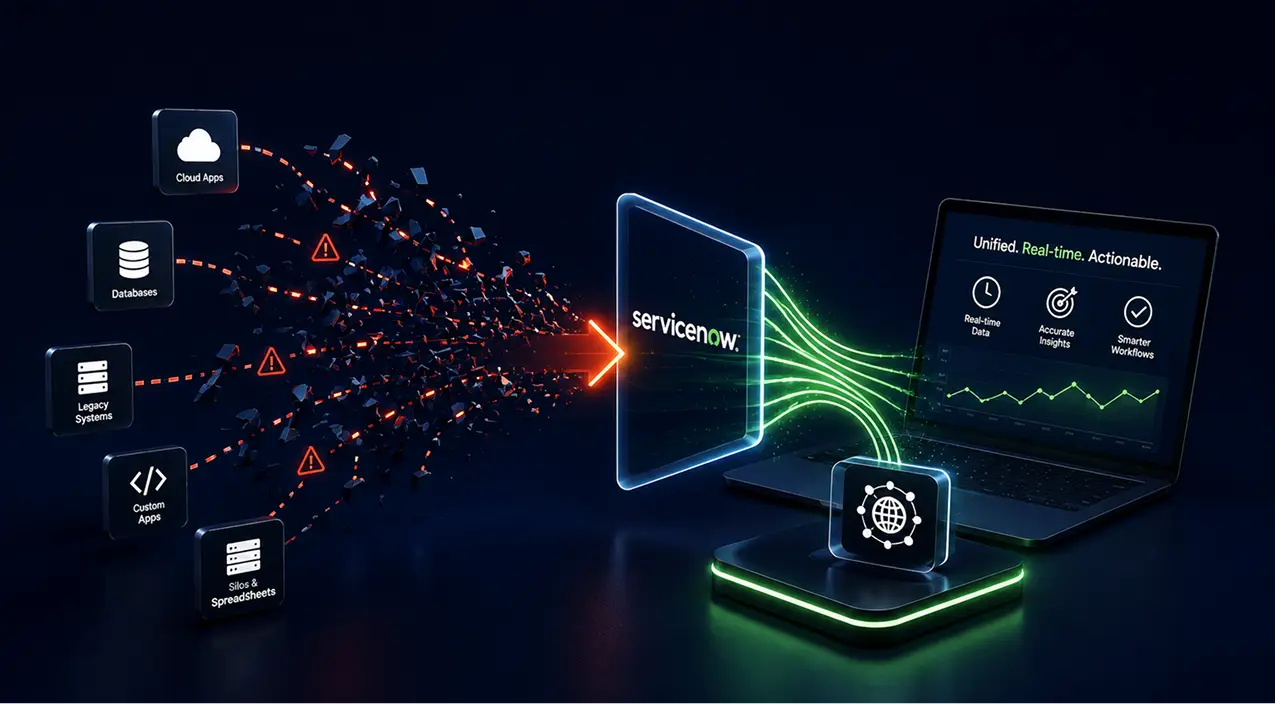 When data is delayed or fragmented, autonomous AI tools and operational workflows fail to deliver accurate, timely results. The Workflow Data Fabric solves this fundamental bottleneck by shifting the paradigm from data duplication to dynamic context virtualization.
Understanding the Architecture: How Zero-Copy Data Workflows Operate
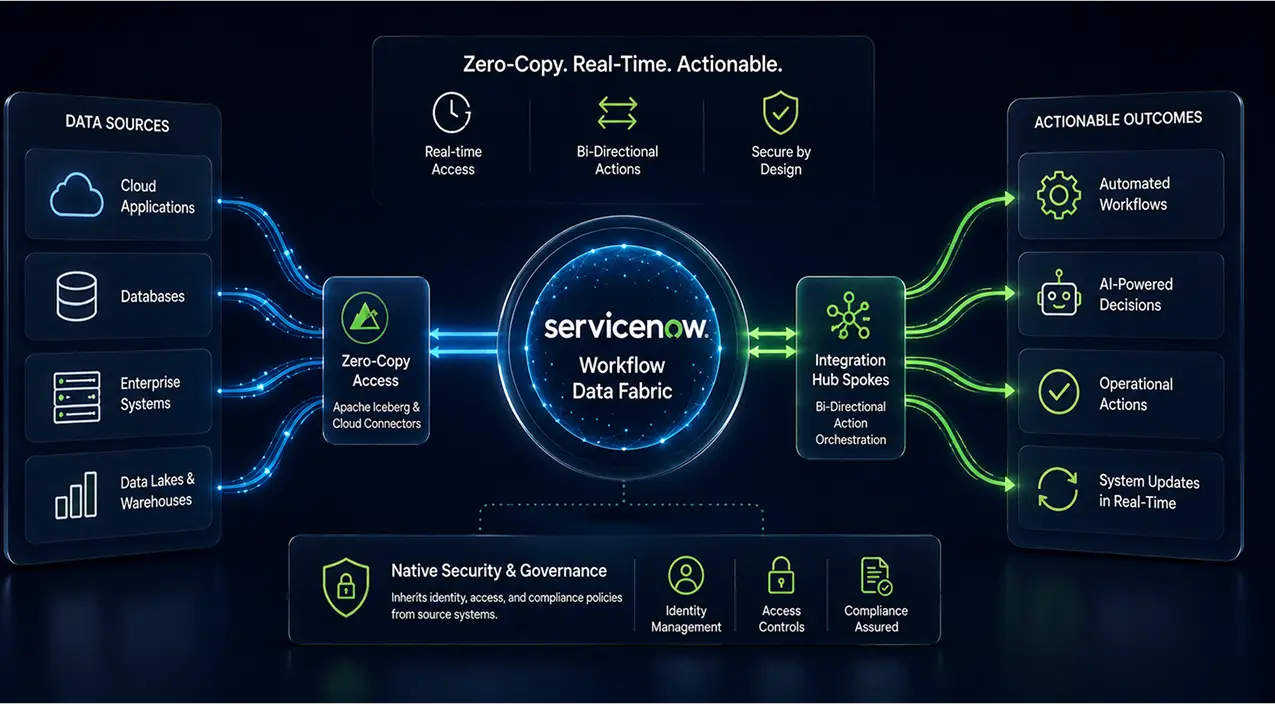
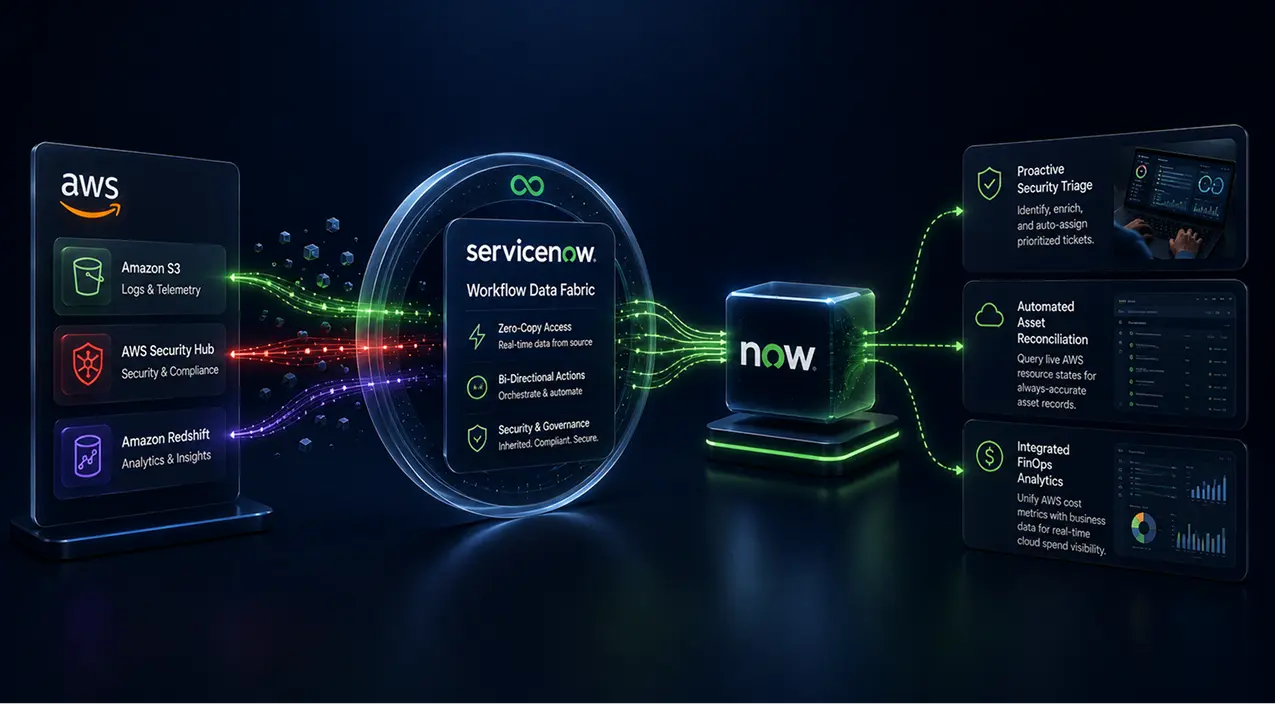
At its foundation, the Workflow Data Fabric acts as an intelligent connective tissue across your enterprise software landscape. Rather than copying external records directly into ServiceNow databases, it establishes secure, real-time virtual channels that allow the platform to read, analyze, and act on external data on demand.
Zero-Copy Architecture
By leveraging modern open standards like Apache Iceberg and native cloud connectors, ServiceNow can query external data sources instantly without physically copying row data into local storage. When an automated workflow evaluates an incident or approval step, it fetches live context directly from the source system, executes the decision, and releases the temporary state.
Bi-Directional Action Orchestration
Data access is only half the battle; systems must also take action. The fabric pairs real-time visibility with bi-directional execution capabilities via Integration Hub spokes. If an AI agent identifies an anomaly using data queried from an external database, it can trigger corrective steps back in the origin system automatically.
Native Security and Governance Inheritance
Connecting disparate databases often introduces compliance risks. The Workflow Data Fabric respects the identity management policies and access controls of source systems. Data accessed dynamically by the platform inherits standard enterprise security boundaries, ensuring sensitive records remain protected and compliant across every interaction.
Real-World Synergy: Orchestrating AWS and Multi-Cloud Ecosystems
For cloud architects and engineers managing hybrid footprints on AWS, the Workflow Data Fabric opens new possibilities for streamlined cloud operations.
AWS environments generate vast amounts of operational telemetry across services like Amazon S3, AWS Security Hub, and Amazon Redshift. Rather than exporting these massive logs into ServiceNow CMDB tables or third-party monitoring platforms, the fabric enables direct, high-speed access to cloud telemetry in real time.Practical Cloud Use Cases
- Proactive Security Triage: When AWS Security Hub identifies a potential compliance issue, a ServiceNow workflow can dynamically query historical asset logs stored in Amazon S3, cross-reference owner details in the CMDB, and assign a prioritized ticket all without moving gigabytes of raw log data.
- Automated Asset Reconciliation: Instead of running overnight batch syncs to update cloud asset catalogs, platform teams can query AWS resource states live during active change requests, ensuring records are always up to date.
- Integrated FinOps Analytics: By virtually connecting AWS cost optimization metrics with internal business unit data in ServiceNow, finance leadership gains a single, real-time view of cloud spend across departments.
Strategic Benefits for C-Suite and Enterprise Leadership
From an executive perspective, implementing a unified data fabric is a strategic investment that delivers tangible business value across speed, cost, and risk management.
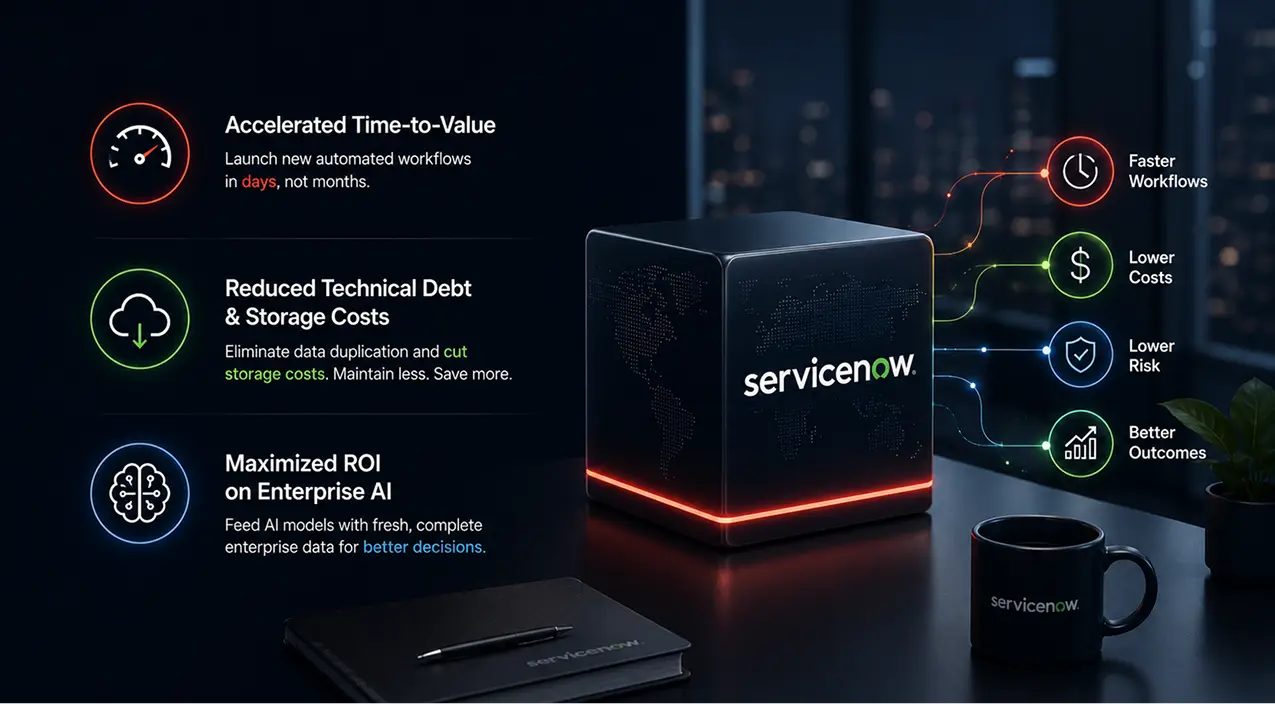
- Accelerated Time-to-Value: Launching new automated workflows takes days instead of months because teams no longer need to design custom database schemas or build complex ETL pipelines.
- Reduced Technical Debt & Storage Costs: Eliminating data duplication drastically cuts cloud storage expenses and reduces the long-term cost of maintaining custom API code.
- Maximized ROI on Enterprise AI: Generative AI tools like Now Assist rely heavily on context. By feeding AI models fresh, comprehensive data from across the enterprise, decision quality improves significantly.
Key Takeaways
- Zero-Copy Virtualization: The ServiceNow Workflow Data Fabric enables real-time access to external enterprise data without needing to copy or duplicate records locally.
- Elimination of Integration Debt: Replaces brittle point-to-point APIs and heavy ETL pipelines with secure, standardized, open connectors.
- AWS & Multi-Cloud Optimization: Allows cloud operations teams to query AWS telemetry and storage repositories instantly to power change management, security, and cost governance.
- Enhanced AI Performance: Provides Now Assist and autonomous agents with live, enterprise-wide context, leading to faster MTTR and more accurate automated decision-making.
Strategic Next Steps
Connecting your fragmented data ecosystem is the crucial first step toward building an AI-native digital enterprise. Whether you are looking to map your multi-cloud data strategy, streamline AWS integrations, or eliminate integration debt across your ServiceNow instance, our technical architects are here to guide you.