
ServiceNow Releases: What Actually Changed for the Enterprise with Each Update
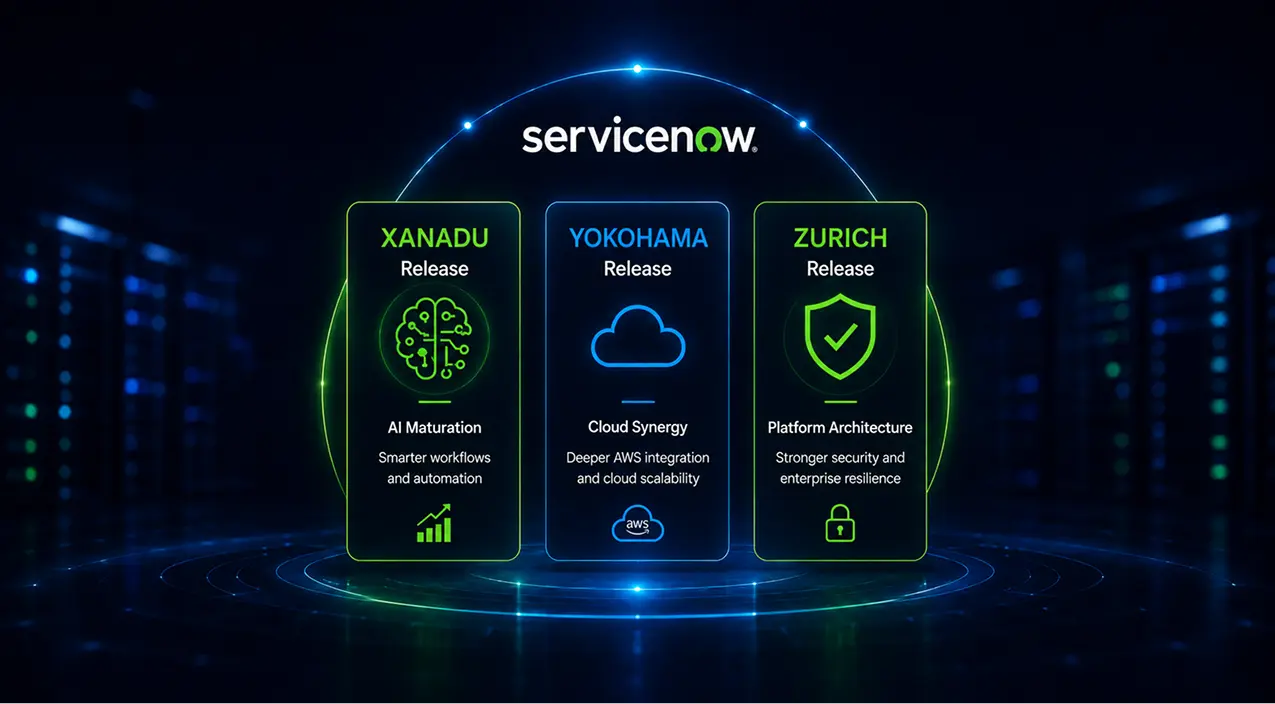
Keeping pace with ServiceNow’s aggressive platform evolution can feel like tracking a moving target. As enterprise technology leaders, executives, and AWS ecosystem partners evaluate their digital roadmaps, understanding the pragmatic differences between recent family releases is critical. Rather than swimming through endless vendor release notes, decision-makers need a clear picture of what ServiceNow release updates across Xanadu, Yokohama, and Zurich deliver in practice.
In this breakdown, we examine the practical evolution of these three releases cutting through marketing noise to highlight how AI maturation, cloud synergy, and platform architecture directly impact your bottom line.Xanadu: The Generative AI Groundwork and Enterprise Foundations
When the Xanadu release arrived, it signaled a decisive pivot from experimental automation to deeply embedded Generative AI (GenAI). For organizations operating at scale, Xanadu was less about incremental UI polish and more about setting up the foundational compute and intelligence layer across Now Assist.
Democratizing AI Across Workflows
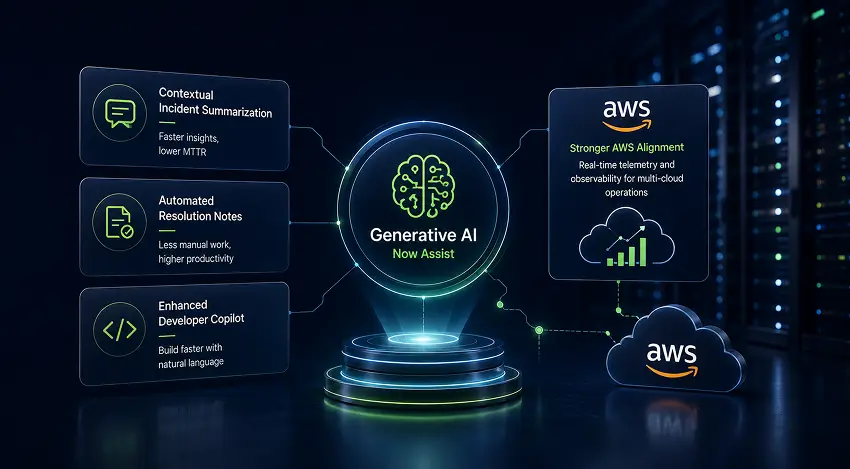
Xanadu expanded Now Assist capability directly into ITSM, CSM, and HR Service Delivery. Rather than relying on third-party LLM wrappers that risk data leakage, we saw ServiceNow embed domain-specific AI models straight into core workflows. Key updates included:
- Contextual Incident Summarization: Reducing mean time to resolution (MTTR) by enabling tier-1 support agents to digest complex histories instantly.
- Automated Resolution Notes: Eliminating manual administrative drag for service desk staff.
- Enhanced Developer Copilot: Allowing application developers to generate scripts and flow steps through natural language commands.
Infrastructure and AWS Alignment
For engineering and cloud operations teams utilizing AWS, Xanadu laid essential groundwork for multi-cloud observability. Improved telemetry connectors meant cloud teams could stream health metrics into ServiceNow AIOps with lower latency and higher data fidelity, bridging the gap between AWS Infrastructure-as-a-Code deployments and IT Service Management.
Yokohama: Autonomous Agents and Hyper-Automation in Action
If Xanadu established the AI building blocks, the Yokohama release focused on operational autonomy. Yokohama shifted the platform paradigm from human-assisted AI (where users prompt and AI answers) to AI-driven agentic workflows allowing systems to evaluate event triggers and act on cross-functional processes with minimal manual intervention.
The Rise of Autonomous AI Agents
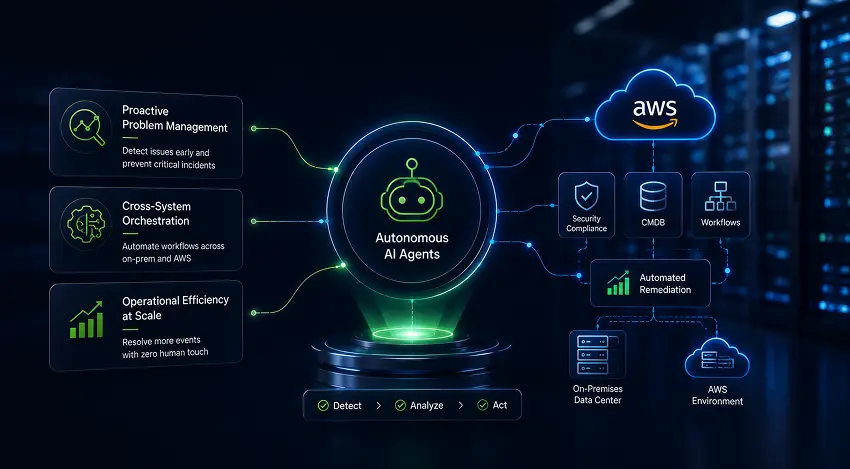
Yokohama introduced specialized AI agents capable of reasoning across enterprise silos. Rather than waiting for an engineer to trigger a remediation script, these agents evaluate incoming signals, cross-reference security compliance databases, and execute standardized workflows autonomously.
- Proactive Problem Management: Identifying recurring infrastructure patterns before they manifest as critical incidents.
- Cross-System Orchestration: Executing complex provisioning workflows spanning on-premises data centers and AWS environments without human bottlenecks.
Executive Value: Operational Efficiency at Scale
For C-suite leaders, Yokohama changed the ROI equation. The focus moved from "how many hours does this save an agent?" to "how many routine operational events can we resolve completely unattended?" This release allowed enterprises to scale their service delivery capacity exponentially without a corresponding increase in operational headcount.
Zurich: Orchestrating the Multi-Cloud, AI-Native Future
The Zurich release represents the current crest of ServiceNow’s platform architecture a maturity phase where Generative AI, cloud infrastructure, and enterprise governance converge seamlessly. Zurich addresses the realities of complex, distributed architectures where AWS, hybrid clouds, and legacy systems coexist.
Deep Cloud & AWS Integration
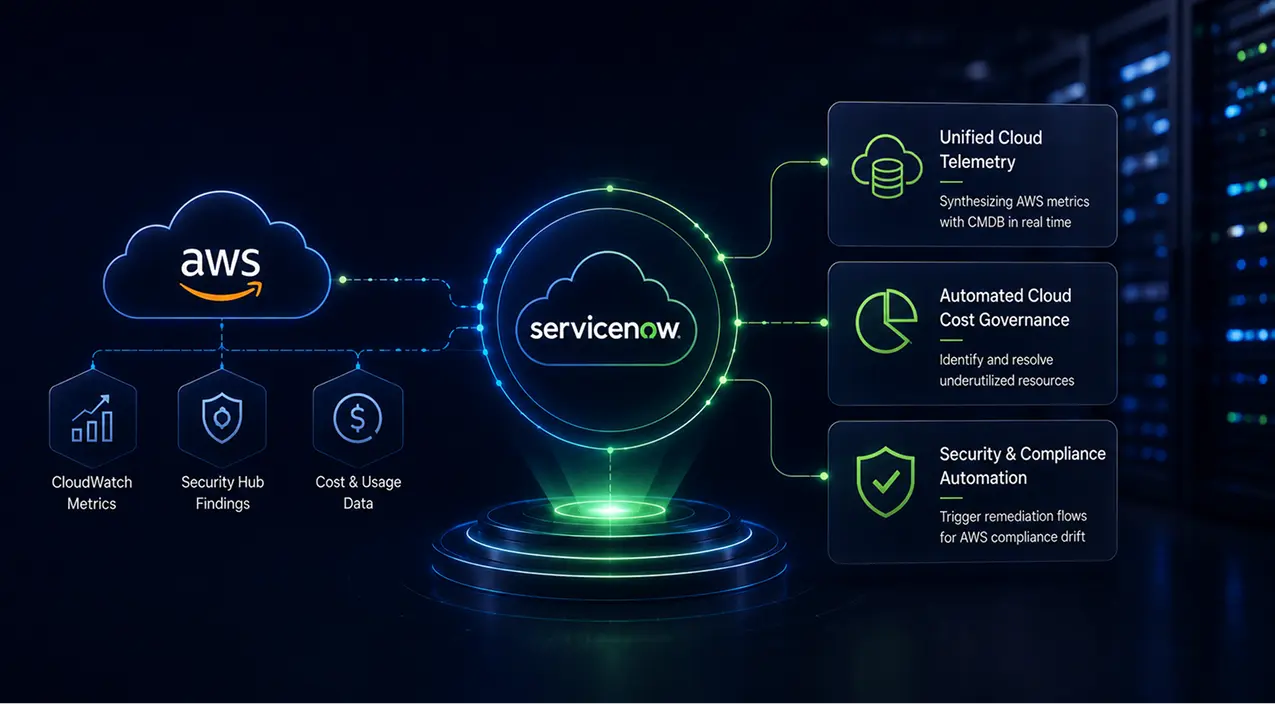
For AWS users and architects, Zurich introduces deeper integration patterns designed for hybrid resilience:
- Unified Cloud Telemetry: Synthesizing native AWS CloudWatch metrics directly with ServiceNow Configuration Management Databases (CMDB) in real time.
- Automated Cloud Cost Governance: Combining operational usage patterns with cloud spend analytics to flag underutilized resources across AWS accounts.
- Security & Compliance Automation: Automatically triggering remediation flows when AWS Security Hub flags compliance drift.
Platform-Wide Governance and Safeguards
As autonomous agents take on higher-responsibility tasks, governance becomes paramount. Zurich introduces enhanced AI safety controls, providing full auditability over decisions made by Now Assist agents. Executive teams gain clear visibility into model lineage, decision logic, and safety boundaries.
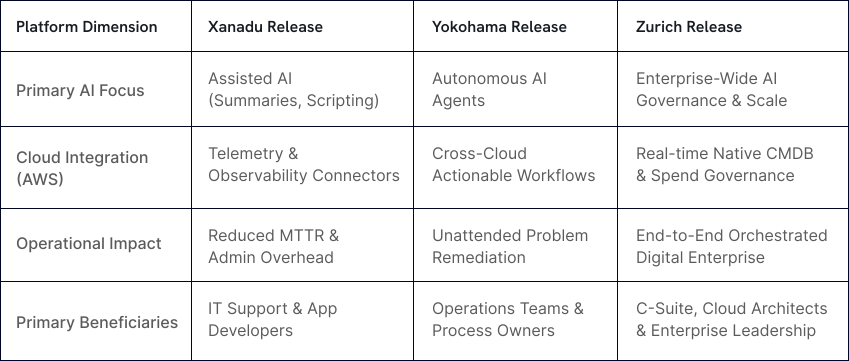
Side-by-Side Comparison: Xanadu vs. Yokohama vs. Zurich
Key Takeaways
- Xanadu: Laid the GenAI baseline, focusing on agent productivity, contextual summaries, and developer enablement.
- Yokohama: Unlocked autonomous operation, shifting workflows from prompt-and-response interaction toward self-healing, agent-led processes.
- Zurich: Elevates platform-wide governance, delivering real-time multi-cloud orchestration and deep alignment with AWS infrastructure environments.
- Strategic Evolution: Upgrading through these releases is not merely a technical maintenance exercise; it is a strategic decision to transition your organization toward an AI-native operational model.
Strategic Next Steps
Navigating ServiceNow release cycles requires balancing technical readiness with strategic business goals. Whether you are upgrading your production environment from Xanadu to Zurich or seeking to maximize your AWS-ServiceNow integration, our dedicated platform architects are here to accelerate your journey.