The Human Renaissance in Human Resources: ServiceNow Accelerates Autonomous HR with "Otto" and Strategic AI Ecosystem Partnerships
Nobody enters the human resources profession simply to spend their career managing an endless queue of administrative tickets. HR Business Partners (HRBPs) choose this field to shape professional paths, navigate complex interpersonal conversations, and cultivate workplaces where individuals feel genuinely motivated to contribute. Similarly, people managers accept the responsibility of direct reports to develop human potential, not to find themselves perpetually chasing approvals across a fragmented maze of enterprise technology. On the consumer side of the equation, corporate employees simply want direct answers to immediate personal queries, rather than navigating a multi-tab system odyssey to find out basic information such as their remaining paid time off (PTO) balances.
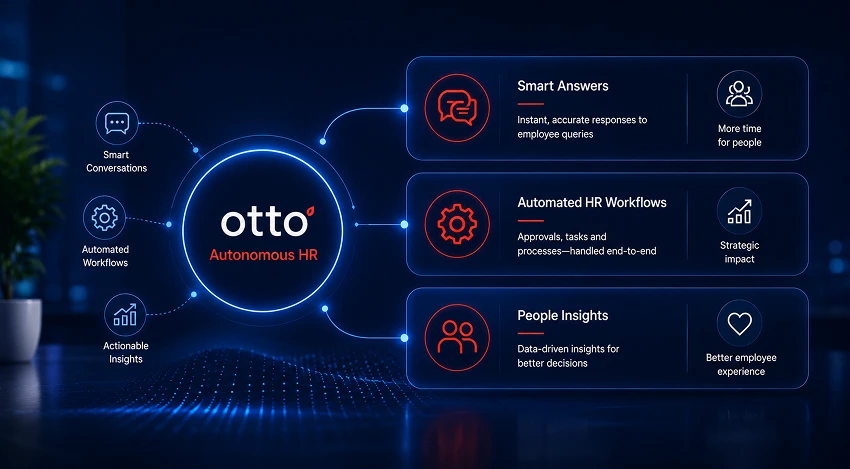
Yet, in the modern enterprise, this is precisely where a significant portion of the workday vanishes. Managers spend valuable time staring at software interfaces instead of collaborating with their teams, while HRBPs remain heavily bogged down by tactical ticketing queues that restrict their ability to focus on organizational strategy. Legacy enterprise architectures were never structurally engineered to solve these challenges, nor were they designed to natively support the workflows demanded by the artificial intelligence era.To systematically address these inefficiencies, ServiceNow has introduced a major wave of expansion to its Autonomous HR framework. Powered by ServiceNow Otto the company's newly developed AI experience that explicitly feeds into autonomous HR workflows these updated capabilities are engineered to absorb routine manual tasks and surface deep operational insights. By handling the foundational administrative overhead, the platform allows personnel to reclaim their time and refocus entirely on the uniquely human dimensions of corporate management and workforce optimization.The HRBP Experience: Transforming Tactical Doers Into Strategic Advisory Forces
The administrative burden placed on human resource departments frequently turns strategic advisors into transactional processors. ServiceNow’s newly updated HRBP experience, delivered natively through the HR Service Delivery (HRSD) module, directly targets this imbalance by automating highly repetitive administrative tasks. The framework leverages a combination of natural language talent analytics, autonomous workflow orchestration, and real-time workforce intelligence to surface critical corporate data at the exact moment an HR leader needs to finalize an organizational decision.
For modern enterprises, this transition means that HRBPs can step away from basic system administration and step fully into a high-value advisory role. Instead of expending daily capacity inside disparate backend software platforms, HR professionals can allocate their efforts toward broad workforce strategy, proactive organization design, and direct mentorship of the talent and teams they were originally hired to support.Next-Generation Manager Experience: Turning Intuition Into a Scalable Enterprise Capability
The most effective leaders possess a natural instinct for identifying what their team members require before those needs escalate into operational friction. The next-generation manager experience, also delivered directly through the HRSD module, is designed to systematically convert that personal instinct into a scalable, platform-supported capability for every manager across the enterprise.
This environment introduces a proactive intelligence layer that automatically pushes appropriate recommendations, goals, and team insights directly to managers before they actively go searching for the data. Key capabilities delivered within this updated framework include:
- A Continuous 1:1 Conversation Assistant: Replaces episodic, transactional review cycles with a continuous, fluid approach to performance evaluation and career development.
- Instantaneous In-Flow Hiring Workflows: Enables managers to execute hiring actions directly within their daily flow of work without the traditional friction of switching between disconnected tracking systems.
- Conversational Policy and Escalation Management: Allows managers to handle policy inquiries, routine approvals, and highly sensitive personnel escalations via standard natural language interfaces, with operational guardrails built directly into the platform fabric.
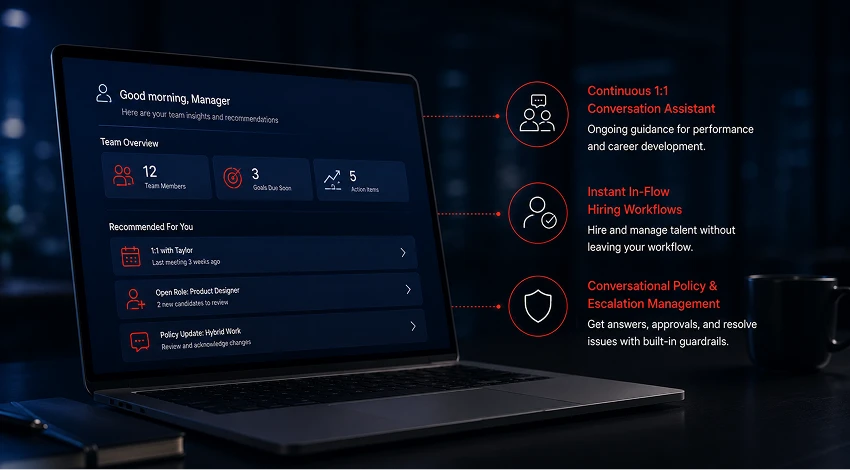
When corporate managers operate within this next-generation digital experience, they effectively reclaim substantial portions of their daily schedule. The operational benefit of this newfound time flows directly down to their respective teams in the form of accelerated decision-making, highly proactive managerial support, and leaders who finally possess the practical capacity to lead.
The Unified Governance Layer: Integrating Industry-Leading HR Intelligence Partnerships
Autonomous HR cannot function in isolation; it requires market-leading intelligence and external data sets to flow seamlessly through a single, strictly governed enterprise platform. To achieve this unified architecture, ServiceNow announced a series of major integrations and alliances on the ServiceNow AI Platform, connecting specialized AI-native technologies directly into core HR workflows.
The Josh Bersin Company’s Galileo Integration
This partnership brings institutional HR intelligence, macroeconomic labor market data, and corporate benchmarking metrics directly into daily workforce planning conversations. Operating as an embedded digital HR advisor connected to every corporate leader, Galileo provides HRBPs with context-specific advice, industry data, and analytical summaries that previously required hours of manual collection, verification, and spreadsheet assembly.
Findem Master Control Program (MCP) Integration
By connecting real-time talent market insights directly to ServiceNow via native MCP integration, this alliance leverages Findem’s proprietary talent intelligence dataset. Encompassing more than 850 million global professional profiles and 1.6 trillion expert-labeled data points, the integration translates external talent market signals into highly actionable insights for both human users and automated digital agents. The resulting blend of deep market data and automated judgment is delivered at machine speed directly within the specific workflows where critical personnel decisions are finalized.
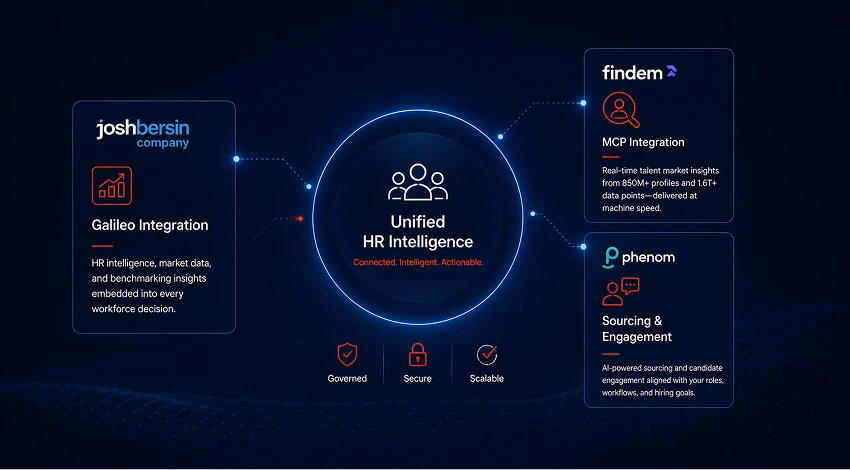
Phenom Sourcing and Candidate Engagement
This collaboration extends advanced AI sourcing mechanisms and candidates’ conversational engagement profiles directly into the core ServiceNow experience. The integration successfully closes the historical loop that existed between macro workforce planning strategy and micro pipeline execution. The underlying Phenom AI structurally understands an organization’s specific industry, native functions, defined internal roles, geographic variations, and active hiring workflows, creating contextually personalized engagement paths that systematically grow smarter with every closed hire.
What Should Organisations Do Now?
To capitalize on these advancements and shift HR operations away from tactical firefighting, enterprise technology and human resource leaders should adopt the following strategic steps:
- Map the Transition to the Q3 2026 HRBP Release: Begin auditing internal HRBP tasks, identifying specific transactional bottlenecks within current ticket queues to prepare workflows for the arrival of natural language talent analytics and autonomous orchestration in Q3 2026.
- Prepare Managers for the H2 2026 Rollout: Structure internal training roadmaps around continuous performance tracking and conversational approvals to ensure smooth adoption when the next-generation manager experience begins rolling out in the second half of 2026.
- Consolidate HR Data Silos Under a Single Governance Model: Ensure that internal personnel data, external benchmarking metrics, and talent acquisition pipelines are unified within the ServiceNow AI Platform to maintain strict compliance and audit trails across multi-departmental workflows.
- Evaluate AI Ecosystem Integrations: Assess how external intelligence tools like Galileo, Findem, and Phenom can be woven directly into existing corporate recruitment, planning, and retention strategies via the unified ServiceNow architecture.
The ongoing transformation of the corporate workplace highlights a fundamental truth: the future of work is not defined by the replacement of human personnel, but by the deliberate partnership of humans and artificial intelligence working in tandem. ServiceNow's expanded Autonomous HR platform effectively demonstrates how technology can execute complex end-to-end workflows that span across HR, finance, legal, IT, and procurement, all while remaining strictly confined within an organization's specific governance model. Ultimately, AI surfaces meaningful value only when human professionals are empowered to direct it, govern its boundaries, and apply the strategic judgment that no technological model can replicate.