ESG as an Operational Reality: Moving Beyond "Greenwashing" with the ServiceNow Operational Sustainability Platform
For years, corporate Environmental, Social, and Governance (ESG) initiatives occupied a comfortable, albeit superficial, space in the enterprise. For many organizations, ESG was treated as a marketing exercise: marketing teams compiled annual glossy PDF brochures filled with generalized statements about carbon reduction, diversity targets, and community investments.
But as we advance through 2026, the regulatory and corporate landscape has undergone a massive, unforgiving shift. Global frameworks like the EU’s Corporate Sustainability Reporting Directive (CSRD), sweeping SEC disclosure requirements, and strict anti-greenwashing litigation have permanently retired the era of voluntary, estimated sustainability reporting.Today, if your organization claims a reduction in carbon emissions or asserts a sustainable sourcing strategy, auditors and regulatory bodies demand raw, auditable proof. You cannot manage what you do not measure, and you cannot measure using disconnected desktop spreadsheets and manual guess-work.This shift explains why leading enterprises are moving past isolated sustainability point-solutions and integrating ESG directly into the core of their business operations. Through ServiceNow’s Operational Sustainability Management (formerly ESG Management) platform, refined through the latest Xanadu and Zurich releases, sustainability is no longer a PR talking point it is a live, automated operational reality.The Core Problem: The Fractured Data Trap
The primary reason companies inadvertently fall into the "greenwashing" trap isn't a lack of intent; it is a limitation of infrastructure. Real ESG data does not live in a single corporate repository.
- Environmental data (Scope 1, 2, and 3 emissions) sits in utility provider
- systems, fleet management databases, and cloud infrastructure consoles.
- Social data resides across HR platforms and talent management software.
- Governance data is buried inside risk management and legal compliance logs.
When an organization tries to manually aggregate this data once a year, the process is error-prone, impossible to verify, and outdated before the ink even dries.
ServiceNow solves this fundamental data challenge by operating as the definitive "platform of platforms." It sits directly above your existing IT architecture, ERPs, HR ecosystems, and facilities management databases, pulling disparate compliance data into a single, automated ledger of truth.2026 Platform Realities: How ServiceNow Operationalizes Sustainability
With the recent enhancements delivered through the Zurich platform cycle, ServiceNow has evolved from a passive tracking ledger into an active, intelligent execution system.
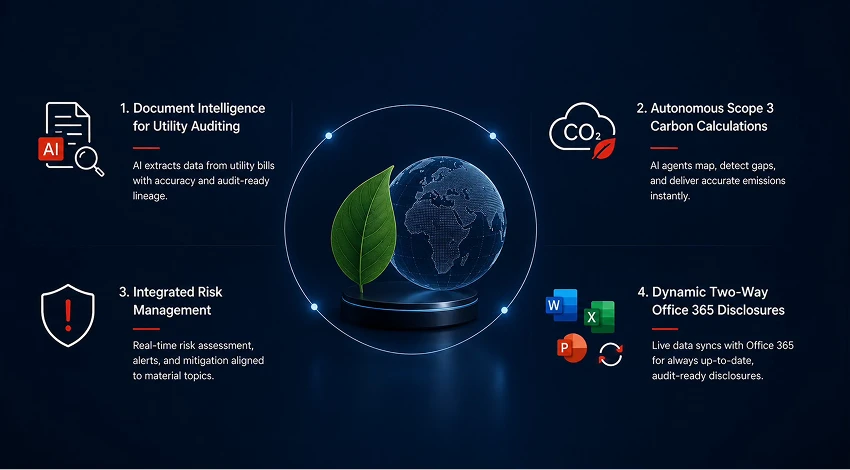
Document Intelligence for Utility Auditing
One of the most significant bottlenecks in carbon accounting is processing raw utility data. In the latest platform update, ServiceNow has introduced Gen AI-Powered Document Intelligence for Operational Sustainability. Instead of requiring administrative teams to manually type figures from electricity, gas, or water statements, native AI models automatically ingest multi-format utility bills, accurately extract consumption metrics, and feed them directly into active metric definition workflows. This effectively eliminates human processing errors while creating an absolute, audit-ready data lineage from invoice to disclosure.
Autonomous Scope 3 Carbon Calculations
Calculating Scope 3 emissions the indirect footprint generated across an enterprise’s broader value chain has historically been an operational nightmare. The Zurich release introduces specialized Agentic Workflows powered by Now Assist for Operational Sustainability. These autonomous AI agents automatically map incoming supplier activity records against localized emission factor libraries. If an anomaly or data gap is discovered, the calculation agent interacts with subflows to cross-reference historical transaction trails, resolving calculation variables instantly without requiring manual intervention from sustainability analysts.
Integrated Risk Management (IRM) and Materiality Alignment
True sustainability requires actively managing risk. The ServiceNow framework binds Operational Sustainability directly with the Integrated Risk Management (IRM) module. This allows corporate risk officers to trigger real-time risk assessments directly against identified material topics. When a regulatory framework shifts or an operational risk threshold is crossed (such as an asset exceeding localized emissions caps), the platform automatically flags the variance, alerts stakeholders, and generates prescriptive mitigation tasks.
Dynamic Two-Way Microsoft Office 365 Disclosures
The final stage of compliance is disclosure. Rather than forcing teams to copy and paste data points into static documents, ServiceNow features deep, two-way dynamic integration with Microsoft Office 365. As live system telemetry updates your internal carbon metrics or social governance KPIs, the data dynamically refreshes inside your formal narrative disclosure drafts. The result is a seamless, perpetual state of audit-readiness.
Transforming Intent into Verification
Moving beyond greenwashing requires a structural transition from narrative claims to verifiable execution. The enterprises leading the market recognize that sustainability performance is intrinsically tied to operational efficiency.
By anchoring your corporate initiatives within the ServiceNow Operational Sustainability Management ecosystem, you replace manual guesswork with verifiable, real-time data streams. You gain the power to track progress against Science-Based Targets accurately, discover latent operational efficiencies, and present internal and external stakeholders with definitive, audit-ready proof of your progress.The era of superficial corporate sustainability reporting is officially over. It is time to unbolt your compliance data from isolated spreadsheets, eliminate greenwashing risks, and run a truly resilient, sustainable enterprise.