
DORA Compliance & ServiceNow: Why FSO is Your Best Defence Against the Digital Operational Resilience Act
For financial institutions operating within or doing business with the European Union, the regulatory clock has run out. The enforcement of the Digital Operational Resilience Act (DORA) has fundamentally altered how the financial sector approaches risk, moving the goalposts from simple financial resilience to absolute digital operational resilience.
Under DORA, it is no longer enough to have a solid balance sheet. Your institution must prove it can withstand, respond to, and recover from severe Information and Communication Technology (ICT) disruptions. Non-compliance is no longer just a legal risk it carries severe daily penalty payments and catastrophic reputational damage. For Chief Risk Officers (CROs), CISOs, and IT leaders, the scramble to stitch together legacy spreadsheets, fragmented GRC tools, and isolated monitoring software has proven to be an operational nightmare. Fortunately, the solution isn’t a brand-new niche compliance tool. The most robust defence against DORA is already running in your enterprise architecture: ServiceNow Financial Services Operations (FSO), augmented by the native AI and resilience capabilities of the Xanadu and Zurich platform releases.The Core Pillars of DORA vs. The Power of FSO
DORA is structured around five core pillars of ICT risk management. To achieve compliance, financial firms must break down the traditional walls separating IT, Cyber Security, Risk Management, and Business Operations.
Here is why ServiceNow FSO built natively on a single platform with a unified data model acts as the ultimate command center for each DORA requirement.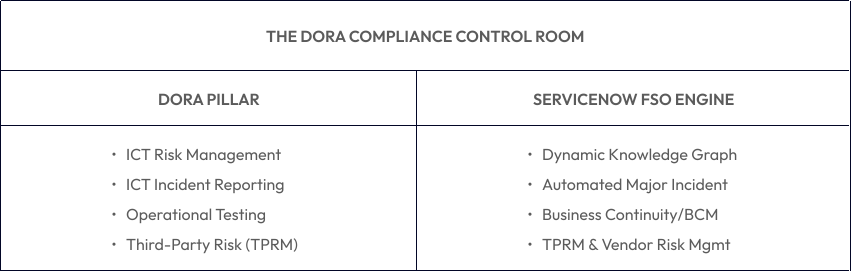
ICT Risk Management: Mapping the Critical Services
DORA demands that financial institutions identify all critical or important functions (CIFs) and map the underlying ICT assets that support them.
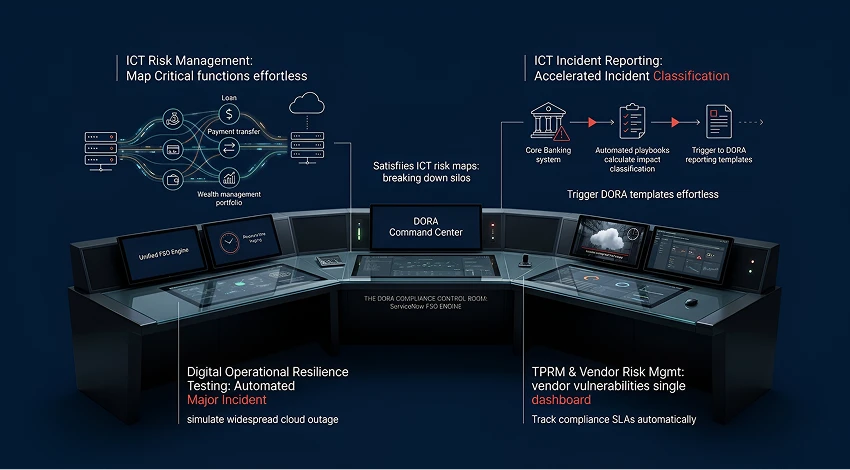
- The FSO Advantage: FSO utilizes ServiceNow’s unified data model and the Knowledge Graph to automatically map financial workflows (such as loan processing, payments, or wealth management) directly to the underlying servers, cloud infrastructure, and software applications. When an audit occurs, FSO provides an active, real-time lineage of your entire digital footprint, satisfying ICT risk mapping effortlessly.
ICT-Related Incident Management and Reporting
DORA mandates strict, accelerated timelines for classifying and reporting major ICT-related incidents to European Supervisory Authorities (ESAs), requiring initial notifications within hours of detection.
- The FSO Advantage: By marrying FSO with ServiceNow's automated incident workflows, the platform eliminates manual reporting delays. If a core banking system experiences latency or a cyber incident occurs, FSO automatically logs the event, runs it through native classification playbooks, calculates the business impact, and triggers pre-built DORA regulatory reporting templates.
Digital Operational Resilience Testing
Financial institutions must regularly test their critical ICT systems for vulnerabilities. For the most critical firms, this includes advanced Threat-Led Penetration Testing (TLPT).
- The FSO Advantage: Using Business Continuity Management (BCM) integrated within FSO, teams can safely design, simulate, and execute operational resilience testing. Whether simulating a widespread cloud outage or a data center failure, FSO orchestrates the simulation, logs the recovery time objectives (RTO), and automatically highlights gaps in your continuity plans for remediation.
Digital Operational Resilience Testing
Financial institutions must regularly test their critical ICT systems for vulnerabilities. For the most critical firms, this includes advanced Threat-Led Penetration Testing (TLPT).
- The FSO Advantage: Using Business Continuity Management (BCM) integrated within FSO, teams can safely design, simulate, and execute operational resilience testing. Whether simulating a widespread cloud outage or a data center failure, FSO orchestrates the simulation, logs the recovery time objectives (RTO), and automatically highlights gaps in your continuity plans for remediation.
ICT Third-Party Risk Management (TPRM)
A massive portion of DORA focuses on systemic risk stemming from vendor concentration (e.g., relying heavily on a single cloud provider or software vendor). Financial firms must actively monitor the security posture of all critical third-party ICT providers.
- The FSO Advantage: The Third-Party Risk Management (TPRM) module within ServiceNow directly feeds into FSO. It gives your procurement, risk, and IT teams a single dashboard to assess vendor vulnerabilities, track compliance SLAs, automate due-diligence questionnaires, and instantly visualize what critical banking functions are exposed if a third-party vendor goes offline.
2026 Architectural Enablers: Autonomous Resilience
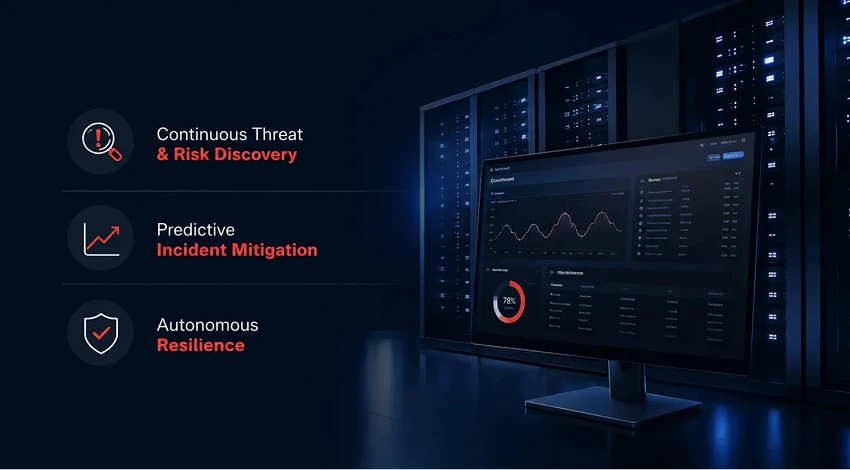
Deploying FSO for DORA in 2026 isn't just about static workflows. ServiceNow's current platform architecture introduces Agentic AI and AI Control Towers to move your institution from reactive compliance to autonomous resilience.
Continuous Threat & Risk Discovery
Instead of waiting for annual or quarterly audits, native AI Specialists continuously sweep your operational pipelines. They proactively flag compliance anomalies, outdated software versions, and unauthorized configuration modifications that violate your established DORA ICT risk frameworks.
Predictive Incident Mitigation
Through advanced AIOps telemetry integrated natively into FSO, the platform doesn't just log incidents it predicts them. If a transactional database exhibits early signs of a memory leak or an unpatched security vulnerability is exposed, an autonomous agent can isolate the risk, spin up a secure containerized environment, and draft a remediation plan for the human "Controller" to approve before the business is ever disrupted.
The Strategic Bottom Line
DORA shouldn't be treated as a checkbox compliance exercise handled exclusively by legal or risk teams in a vacuum. It is a holistic operational challenge that requires an absolute understanding of your enterprise workflow technology.
By anchoring your compliance program within ServiceNow Financial Services Operations (FSO), you aren't just buying insurance against regulatory fines. You are breaking down operational silos, modernizing your core financial architecture, and building a high-performance, self-healing digital enterprise that is resilient by design.