AI Control Tower: The Governance Layer Every Admin Needs to Understand
As enterprise organizations rapidly deploy Generative AI skills and autonomous virtual workers, managing these intelligent tools requires a fundamental shift in platform administration. Deploying AI without a centralized oversight model exposes businesses to data privacy drift, compliance violations, and unpredictable operational costs. Understanding the ServiceNow AI Control Tower admin governance layer is now essential for platform managers, enterprise executives, and cloud leaders who want to scale automation safely.
In this guide, we break down why centralized oversight is critical for modern operations, examine the key capabilities built into the control center, and explain how to apply robust governance across hybrid enterprise environments and AWS cloud architectures.The Executive Necessity for Centralized AI Oversight
When artificial intelligence features were limited to basic conversational prompts, managing access was relatively straightforward. Today, as intelligent models read multi-table record histories, auto-generate code, and initiate system changes, traditional access management tools are no longer enough.
Without a unified visibility layer, organizations face significant operational risks:- Fragmented Model Management: Different departments deploying isolated AI models without central visibility into data handling practices.
- Compliance and Privacy Risks: Sensitive customer or operational data inadvertently passing into non-approved language models.
- Unmonitored Cost Accumulation: Autonomous processes triggering high-frequency background operations without usage caps or oversight.
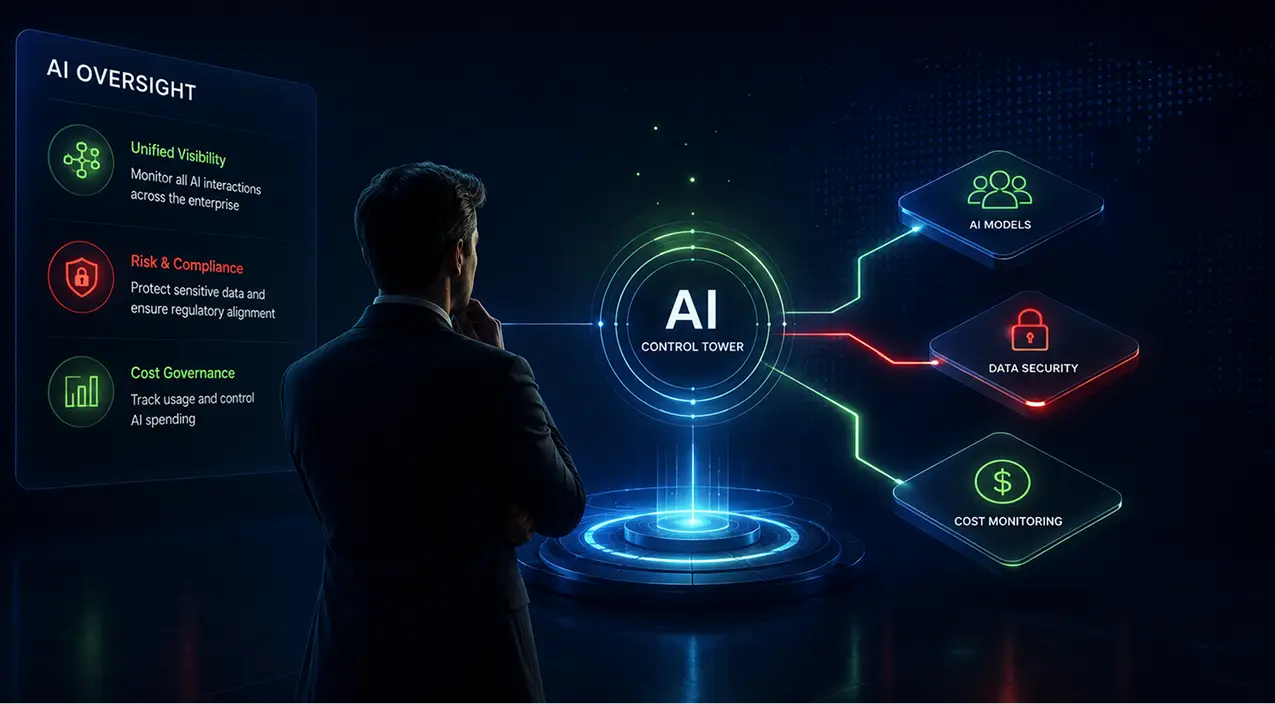 The AI Control Tower addresses these challenges by serving as a mission control dashboard. It provides platform owners with a single pane of glass to monitor, evaluate, and secure every artificial intelligence interaction occurring across the enterprise.
Core Pillars of the ServiceNow AI Control Tower Admin Governance Layer
To maintain control without slowing down innovation, the platform organizes governance into three distinct administrative pillars: operational visibility, access enforcement, and performance auditing.
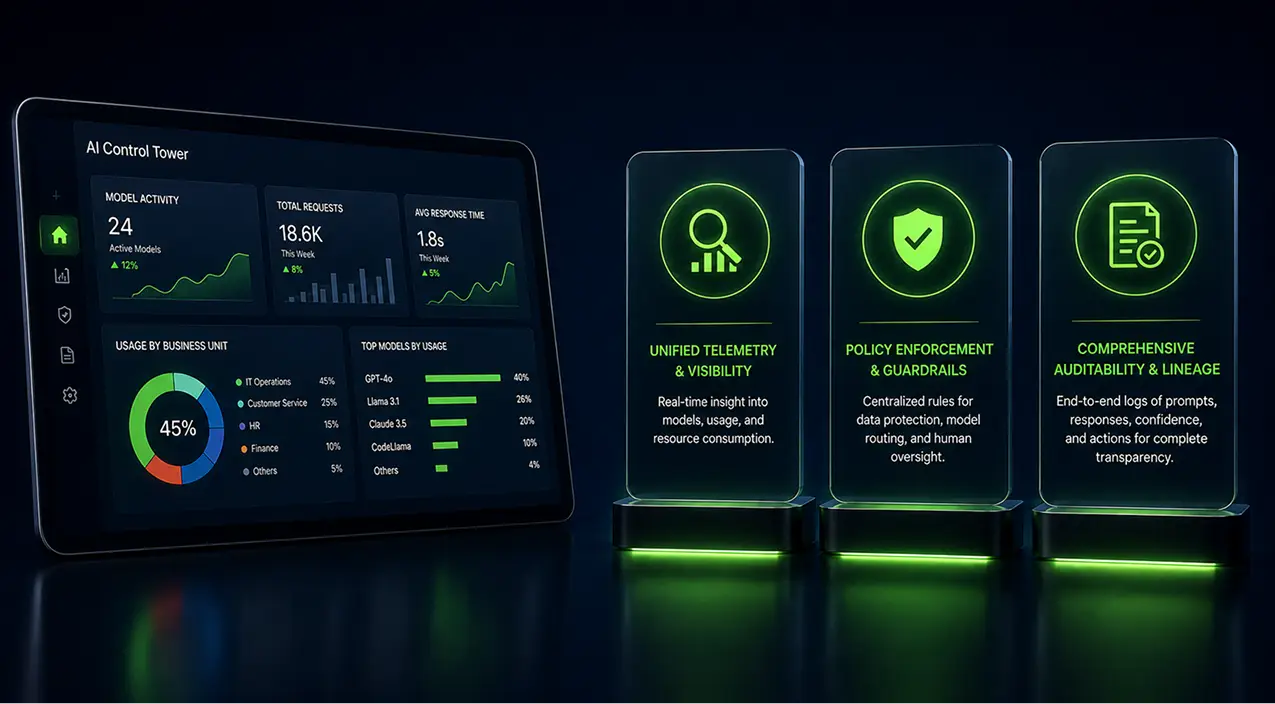
Unified Telemetry and Visibility
The control center aggregates system telemetry into intuitive executive dashboards. Administrators gain real-time insight into which models are actively running, which business units trigger the highest volume of requests, and how computational resources are being consumed. This visibility ensures technology leaders can track usage trends and prevent unexpected budget spikes.
Policy Enforcement and Guardrails
Rather than relying on individual developers to configure security parameters, administrators can establish global safety rules centrally. These guardrails include:
- Data Masking and Anonymization: Automatically redacting personally identifiable information (PII) before context packages reach underlying language models.
- Model Routing Rules: Directing low-risk tasks to lightweight, cost-effective models while reserving advanced, high-capability models for complex analysis.
- Human-in-the-Loop Safeguards: Forcing approval checkpoints when autonomous processes attempt sensitive system modifications.
Comprehensive Auditability and Lineage
For compliance officers and enterprise auditors, the platform maintains detailed transaction logs. Administrators can inspect the exact prompt context, model response, confidence scores, and subsequent platform actions taken for any automated task. This clear chain of custody ensures full transparency during regulatory reviews.
Extending Governance Across AWS and Multi-Cloud Environments
Modern IT operations rarely live in a single ecosystem. For teams managing hybrid infrastructure across ServiceNow and AWS, governance must extend across platform boundaries to cover end-to-end operational flows.
Harmonizing Cloud Telemetry with Service Governance
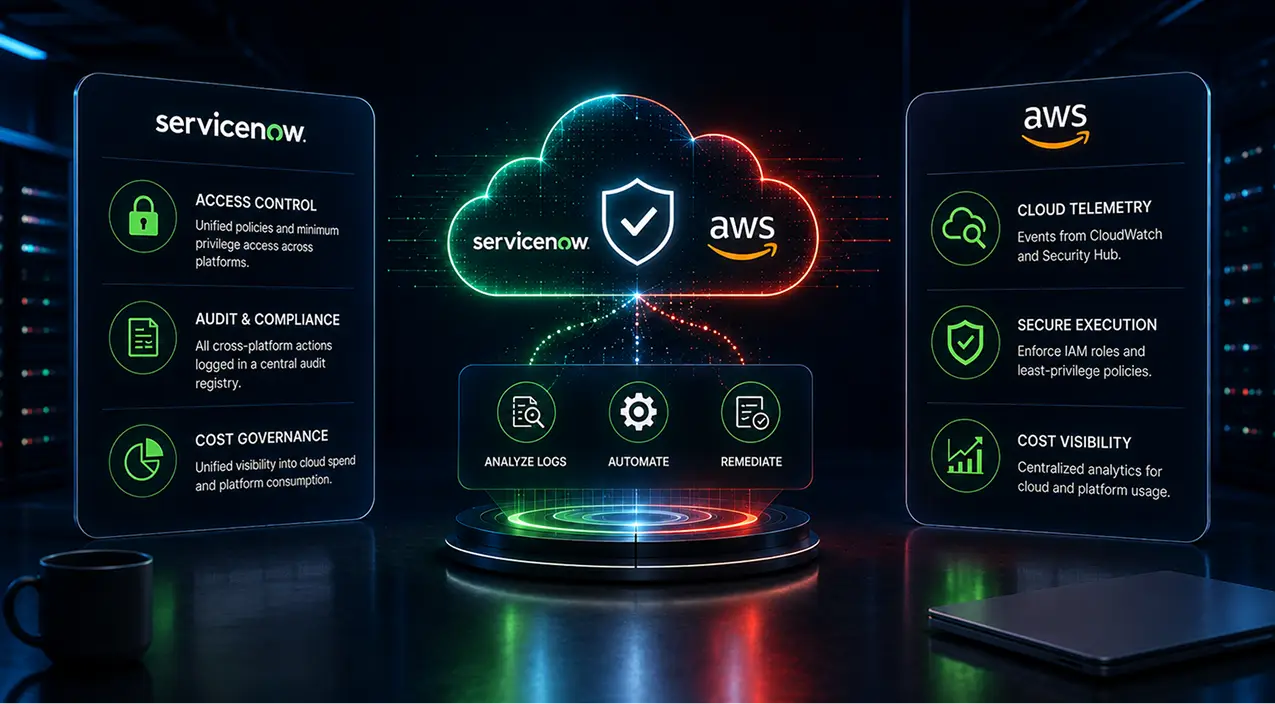
When AWS CloudWatch or Security Hub triggers automated events, intelligent agents step in to analyze logs and initiate remediation workflows. By applying centralized governance to these multi-cloud interactions, we can ensure:
- Consistent Access Control: AWS infrastructure credentials and role-based policies are strictly enforced, ensuring agents operate with minimum necessary privileges.
- Unified Audit Trails: Cloud remediation actions initiated by Now Assist or third-party models are logged directly within the central audit registry alongside standard IT service updates.
- Cross-Platform Cost Control: Usage analytics from both AWS compute environments and platform consumption credits feed into centralized financial dashboards, giving leadership complete visibility over total cost of ownership.
Best Practices for Implementing AI Control Tower Governance
Deploying an effective oversight layer requires a balanced approach providing robust security without creating administrative friction that slows down productivity.
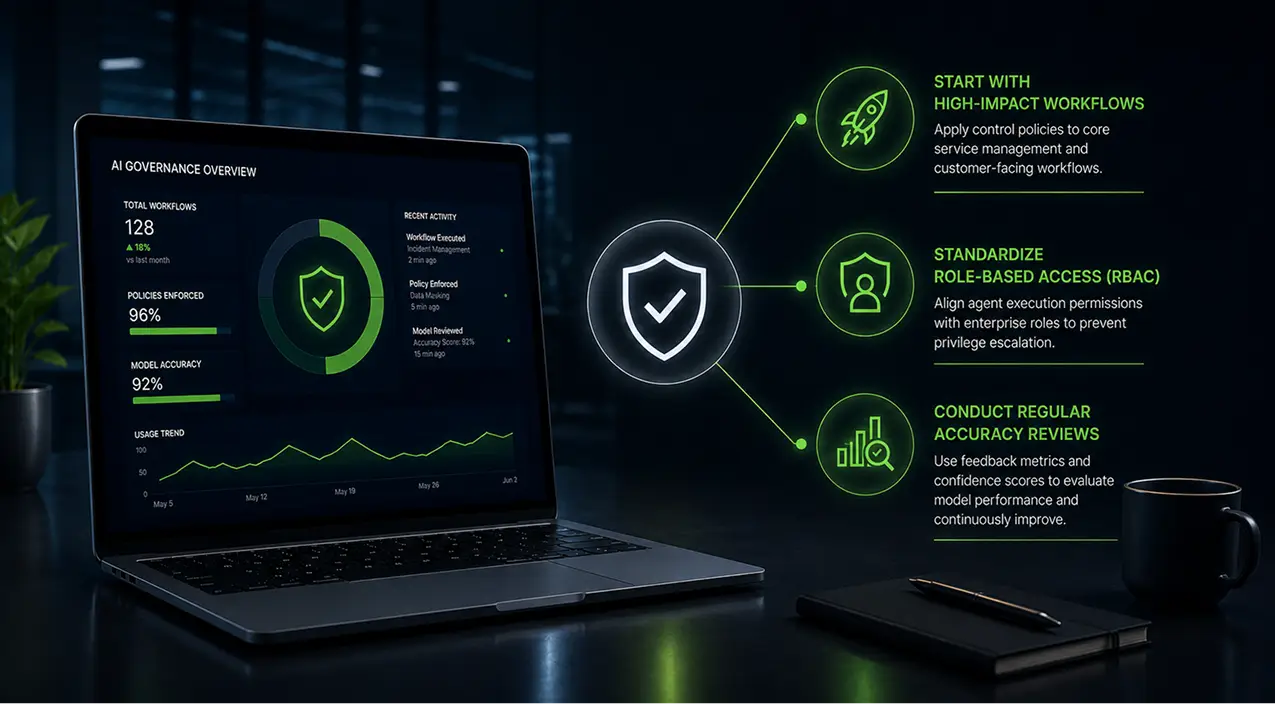
- Start with High-Impact Workflows: Begin by applying control policies to core service management and customer-facing workflows before scaling governance across niche applications.
- Standardize Role-Based Access (RBAC): Align agent execution permissions directly with existing enterprise role frameworks to prevent privilege escalation.
- Conduct Regular Accuracy Reviews: Use built-in feedback metrics and confidence scores to evaluate model performance over time, adjusting prompt templates and tools as operational needs evolve.
Key Takeaways
- Centralized Command: The AI Control Tower provides administrators with a single dashboard to monitor, secure, and evaluate all platform AI activities.
- Built-In Risk Mitigation: Features like automatic PII masking, model routing, and human-in-the-loop triggers safeguard enterprise data and prevent unintended automation errors.
- Hybrid Cloud Alignment: Multi-cloud operations connecting AWS infrastructure with ServiceNow workflows benefit from unified audit logging and consistent policy enforcement.
- Balanced Governance: Establishing clear administrative guardrails allows organizations to accelerate automation adoption while satisfying strict compliance and security standards.
Strategic Next Steps
Establishing a mature governance structure is essential for scaling artificial intelligence safely across your digital enterprise. Whether you need to configure your initial policy frameworks, optimize model usage across hybrid AWS environments, or audit current platform compliance, our experienced platform architects are ready to assist.